

As an Amazon Associate, I earn from qualifying purchases at no extra cost to you.
If you have ever taken a stroll along the beach, chances are you’ve spotted those chalky, white, oval-shaped objects washed up on the shoreline. They are cuttlefish bones—the internal skeletal structure of the cuttlefish—and while bird owners have used them for decades to keep their pets healthy, they are also an absolute game-changer for your garden.
If you are growing tomatoes this year, foraging for these beach treasures might just be the best thing you can do for your harvest. Here is a look at why cuttlefish bones are a fantastic, free, and completely natural fertilizer for tomato plants, and exactly how you can use them in your garden.
The Magic Ingredient: Calcium Carbonate
Tomatoes are notoriously heavy feeders, and if there is one nutrient they crave above almost all others to produce perfect fruit, it is calcium.
Cuttlefish bones are almost entirely made up of calcium carbonate. When introduced to your soil, they provide a slow-release source of this vital nutrient. Unlike synthetic fertilizers that can wash away quickly or cause nutrient burn, the natural structure of cuttlefish bone breaks down gradually, feeding your soil and your plants over a longer period.
The Ultimate Shield Against Blossom End Rot
Every tomato grower dreads blossom end rot—that frustrating condition where the bottom of an otherwise beautiful, ripening tomato turns black, sunken, and leathery.
Blossom end rot isn’t a disease caused by a pest or fungus; it is a physiological disorder directly caused by a calcium deficiency in the plant. While inconsistent watering often triggers it (as water is what carries nutrients up through the roots), having a rich, steady supply of calcium in the soil is your best line of defense. By introducing cuttlefish bone to your tomato beds, you ensure that as your plants take up moisture, they are getting a steady dose of the calcium required to build strong cell walls in the developing fruit.
How to Prepare and Use Foraged Cuttlefish Bones
If you are lucky enough to live near the coast or enjoy beachcombing, you can forage for cuttlefish bones entirely for free. Before tossing them into your garden, however, there are a couple of quick steps you should follow:
1. Wash and Desalinate
Because they have been floating in the ocean, washed-up cuttlefish bones are coated in sea salt. High levels of salt can be harmful to your garden soil and plants.
- The Fix: Take your foraged bones and soak them in a bucket of fresh water for 24 to 48 hours, changing the water once or twice. Give them a final rinse, and let them dry thoroughly in the sun.
2. Grind or Crush Them Down
While you could bury a whole cuttlefish bone in the soil, it would take a very long time to break down. To make the calcium readily available to your tomato roots, it helps to break it up.
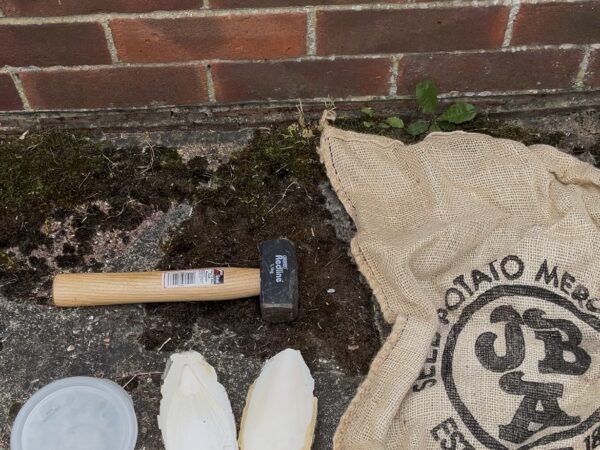
- The Fix: Cuttlefish bone is incredibly soft and brittle. You can easily break it apart with your hands, crush it with a hammer inside a sturdy bag, or grind it down into a fine powder using an old blender or mortar and pestle.
Heavy-Duty Lump Hammer (As Seen on YouTube)
- Why I rely on it: This is the exact tool I use to break down beach-foraged cuttlefish bone before feeding it into the grinder. It delivers the perfect amount of weight and force needed to safely shatter tough, raw materials into manageable pieces for organic tomato fertilizer without causing hand fatigue.
 Check Price and Availability on Amazon UK


3. Application Methods
- At Planting Time: Toss a generous handful of the crushed powder or small fragments directly into the planting hole before setting your tomato transplant into the ground. This places the calcium right where the expanding root system can access it.
- Top Dressing: If your tomatoes are already established and growing, gently scratch a layer of the crushed powder into the top inch of the soil around the base of the plant, and then water thoroughly.
A Sustainable, Off-Grid Approach to Gardening
Utilizing foraged items like cuttlefish bone embodies the true spirit of self-sufficiency and urban homesteading. It allows you to close the loop on your gardening inputs by turning a natural, discarded beach find into an abundant harvest of homegrown food—without spending a penny at the garden center.
Next time you are walking along the coast, keep your eyes peeled for these chalky white gems. Your tomato plants will thank you for it!
Do you use foraged ingredients to fertilize your garden? Let me know your favorite natural soil amendments in the comments below!