

Disclaimer: This post contains affiliate links. If you make a purchase through these links, I may earn a small commission at no extra cost to you. I only recommend tools and products I personally use and trust on our homestead.
Maintaining clean, healthy water in a small garden pond or aquaponics setup can feel like an uphill battle. Algae blooms,built-up fish waste, and rising nitrate levels often require expensive mechanical filters or harsh chemical treatments.Fortunately, nature offers a much simpler, low-cost solution: watercress.
Watercress (Nasturtium officinale) is a fast-growing, heavy-feeding aquatic plant that acts as a natural biological filter. By integrating a small-space watercress filter into your system, you can naturally clarify your water, protect your fish, and harvest a fresh, peppery salad green right from your backyard.
Why Watercress is the Ultimate Bio-Filter
In any closed water system containing fish—whether it’s a koi pond, a small container garden, or an aquaponics tank—fish excrete ammonia. Beneficial bacteria convert this ammonia into nitrites and eventually into nitrates. While nitrates are far less toxic, high concentrations fuel massive algae outbreaks.
Just like managing livestock waste in backyard poultry setups—such as keeping an efficient urban quail setup—balancing nutrient inputs and outputs is the key to a healthy homestead. Watercress shines here by acting as a heavy feeder that absorbs excess nitrates directly out of the water column.
This is where watercress shines:
- Heavy Nutrient Uptake: Watercress grows rapidly and requires large amounts of nitrogen and phosphorus to thrive. As water flows over its root system, the plant absorbs these excess nitrates directly out of the water column.
- Massive Bacterial Surface Area: The fine, feathery root network of watercress creates an ideal habitat for beneficial nitrifying bacteria, doubling your system’s biological filtration capacity.
- Natural Shade & Oxygenation: Dense top growth shades the water surface, keeping water temperatures cool during summer and suppressing algae by blocking sunlight.
What You’ll Need for a DIY Watercress Filter
Setting up a small-space watercress filter requires only a few basic components:
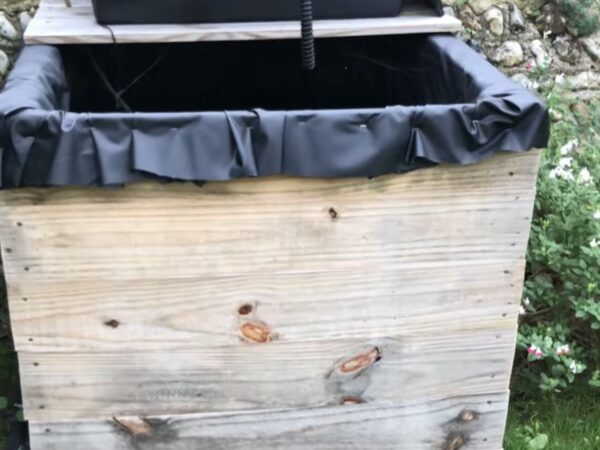
- A Shallow Filter Container: A plastic balcony planter, gravel tray, or small tote container positioned above your main tank or pond.
- Filter Media: Expanded clay pebbles (hydroton) https://link.amazon/B01uNb8B0 or clean pea gravel to support the plant roots while allowing free water movement.
- Small Submersible Pump: A low-wattage or solar-powered pump https://link.amazon/B0eEcNy9f connected to flexible tubing to move water from your tank into the filter tray.
- Watercress Plants: Bare-root watercress plants or store-bought fresh watercress stems (which root effortlessly in water within days).
Step-by-Step Setup Guide
1. Position the Filter Tray
Place your filter tray slightly higher than your main pond or tank. Drill an exit hole or attach an overflow spout at one end of the tray so water can gravity-feed back into your main tank.
2. Fill with Growing Media
Fill your container with rinsed pea gravel or clay pebbles. This media holds the plants upright and traps solid debris before the water returns to the fish.
3. Plant the Watercress
Strip the lower leaves off your watercress stems and tuck them gently into the gravel bed. Ensure the roots or bare stems are sitting where the water level will reach them.
4. Connect the Flow
Position your pump in the main pond/tank and run the outlet tubing to the opposite end of the watercress tray. Turn on the pump to establish a continuous, gentle trickle across the gravel bed.
Maintenance & Harvesting Tips
- Regular Harvesting: To keep your watercress actively pulling nitrates, trim the top leaves regularly. Regular harvesting encourages dense new stem growth, which in turn demands more nutrient uptake.
- Manage Water Flow: Ensure the flow rate is steady but gentle. Fast, rushing water can dislodge young plants and wash away accumulated beneficial bacteria.
By combining living watercress with a simple gravity return, you create a self-sustaining loop: your fish feed your plants, and your plants clean the water for your fish. For a full breakdown of the exact pumps and solar equipment we use across our plot, check out our complete Urban Homesteading Toolkit.